


Grade 23 Titanium: Properties, Uses & Material Guide
Date:2026-03-12
What Is Grade 23 Titanium?
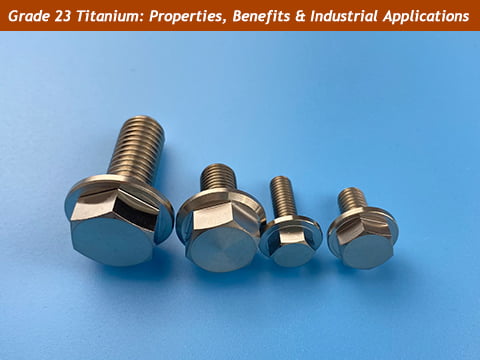
Grade 23 titanium—often called Ti-6Al-4V ELI—is a cleaner and purer version of the well-known Grade 5 titanium alloy. Both alloys contain titanium, aluminum, and vanadium, but Grade 23 is produced with extra-low levels of impurities such as oxygen, nitrogen, and hydrogen. These small elements may not seem important, but reducing them makes the alloy tougher, more flexible, and safer to use in critical environments.
Because of this improved purity, Grade 23 offers a strong mix of benefits:
-
High strength
-
Excellent resistance to cracking and fatigue
-
Outstanding biocompatibility for use inside the human body
That’s why Grade 23 titanium is widely used for medical implants, surgical tools, and high-stress aerospace parts where reliability truly matters.
To ensure consistency and safety, the alloy follows strict global standards, including ASTM F136, ASTM F1295, and ISO 5832-3. At AEM Metal, we carefully control these specifications so every batch meets the required purity and performance levels.
In simple terms, Grade 23 titanium is a strong yet highly refined material designed for precision applications where both performance and safety are critical.
Key Properties of Grade 23 Titanium
Grade 23 titanium is valued for its balance of strength, purity, and durability. Its properties make it suitable for demanding applications where both mechanical performance and reliability are essential.
1. Mechanical Properties
Grade 23 titanium offers impressive mechanical strength while remaining more flexible than standard titanium alloys.
-
High tensile and yield strength help the material withstand heavy loads.
-
Better ductility (thanks to lower impurities) allows it to absorb impact without cracking.
-
Superior fatigue resistance makes it ideal for components that experience repeated stress, such as medical implants and aerospace fasteners.
Overall, it provides strong performance while remaining safer and more predictable under long-term use.
2. Physical and Chemical Stability
The alloy has several natural advantages that come from titanium’s unique characteristics:
-
Low density helps keep parts lightweight without losing strength.
-
Excellent corrosion resistance, especially in body fluids and harsh environments, ensures long-term durability.
-
Good thermal and oxidation resistance makes it stable at high temperatures.
These qualities allow Grade 23 titanium to perform reliably in both high-performance engineering and medical environments.
3. Biocompatibility
One of the biggest reasons manufacturers choose Grade 23 is its exceptional biocompatibility. The extra-low interstitial content (ELI) significantly reduces the risk of irritation or rejection inside the body.
-
Safe for long-term contact with bone and tissue
-
Highly stable and corrosion-resistant in biological environments
-
Commonly used for implants like screws, dental roots, and joint components
This high level of purity is what separates Grade 23 titanium from other general-purpose titanium alloys.
Grade 23 Titanium vs. Grade 5 Titanium (Ti-6Al-4V)
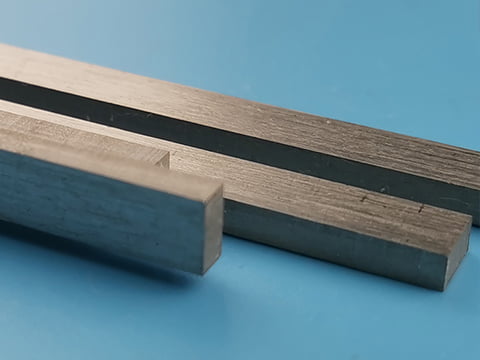
Grade 23 and Grade 5 are closely related alloys, but they are designed for different levels of performance. Both contain the same main elements—titanium, aluminum, and vanadium—but the key difference lies in purity. Grade 23 has extra-low interstitials (ELI), meaning significantly lower oxygen, nitrogen, and hydrogen levels. This small change creates big differences in toughness, flexibility, and fatigue resistance.
Below is a simple comparison:
Comparison Table: Grade 23 vs. Grade 5 Titanium
|
Property / Feature |
Grade 23 Titanium (Ti-6Al-4V ELI) |
Grade 5 Titanium (Ti-6Al-4V) |
|
Purity Level |
Extra-low interstitials (ELI) |
Standard impurity levels |
|
Ductility & Toughness |
Higher, resists cracking better |
Good but slightly lower |
|
Fatigue Resistance |
Excellent |
Good |
|
Biocompatibility |
Superior – suitable for implants |
Acceptable – used for general industry |
|
Strength |
High |
Slightly higher than Grade 23 |
|
Typical Use Cases |
Medical implants, surgical tools, aerospace safety parts |
Aerospace, industrial components, high-strength structural parts |
|
Standards |
ASTM F136 / F1295 / ISO 5832-3 |
ASTM B348 / ASTM B381 |
|
Best Choice For |
Safety-critical or body-contact applications |
General industrial high-strength applications |
Which One Should You Choose?
-
Choose Grade 23 Titanium if you need extreme reliability, better toughness, and high biocompatibility. It is perfect for medical, dental, or aerospace parts where failure is not acceptable.
-
Choose Grade 5 Titanium if you need maximum strength and are producing parts for general engineering, aerospace frames, industrial tools, or structural components.
In short, Grade 23 is the safer and purer option, while Grade 5 is the more common and cost-effective choice for general high-strength uses.
Common Forms & Material Options Available at AEM Metal
To meet different manufacturing needs, AEM Metal supplies Grade 23 titanium in multiple shapes and dimensions. Whether you need raw materials or precision-machined components, we provide stable quality and flexible production options.
1. Titanium Bars & Rods
Grade 23 titanium bars and rods are widely used for implants, fasteners, and high-precision mechanical parts.
-
Available in diameters from small medical sizes to large industrial specifications
-
Excellent machinability for CNC turning, milling, and threading
-
Uniform grain structure for better fatigue resistance
2. Titanium Sheets & Plates
Sheets and plates offer dimensional stability and are ideal for forming, cutting, and machining.
-
Tight thickness tolerance
-
Smooth surfaces for medical or aerospace finishing
-
Suitable for laser cutting, stamping, or custom machining
3. Titanium Tubes
Grade 23 tubes are preferred for lightweight structures and medical device components.
-
High strength-to-weight ratio
-
Good internal cleanliness
-
Suitable for bending and welding
4. Custom-Machined Titanium Parts
AEM Metal also provides custom-made Grade 23 titanium parts based on your drawings.
-
CNC machining, drilling, milling, grinding
-
Polishing, surface cleaning, and custom coatings
-
Tight tolerances for medical and aerospace precision
-
Prototype and small-batch support for R&D projects
Because of our strong material control and machining experience, AEM Metal can supply both standard stock sizes and fully customized components to match your project requirements.
How Grade 23 Titanium Is Manufactured — AEM Metal’s Production Capability
Producing Grade 23 titanium requires strict control over purity, grain structure, and mechanical performance. At AEM Metal, each step is carefully managed to ensure the alloy meets the requirements for high-precision medical and aerospace applications.
1. Controlled Melting & Alloy Refinement
Grade 23 titanium begins with high-purity raw materials melted using processes such as VIM (Vacuum Induction Melting) and VAR (Vacuum Arc Remelting).
-
These melting methods reduce impurities like oxygen, nitrogen, carbon, and hydrogen.
-
The result is an Extra-Low Interstitial (ELI) alloy with superior toughness and biocompatibility.
Each batch is tested using chemical analysis (ICP-MS, GDMS) to confirm purity before further processing.
2. Forging & Heat Treatment
Once the ingots are prepared, they undergo hot forging or hot rolling to refine the grain structure.
-
This increases density and improves mechanical uniformity.
-
Heat treatment follows to balance strength and ductility, ensuring the material can withstand long-term stress without cracking.
These steps are essential for creating titanium suitable for implants, aerospace fasteners, and precision components.
3. Precision Machining & Forming
After shaping, the material is machined into bars, plates, tubes, or custom parts.
AEM Metal uses:
-
CNC machining
-
Turning and milling
-
Drilling and grinding
-
Surface finishing and cleaning
Grade 23 titanium has good machinability compared to other high-strength alloys, which allows for tight tolerances and consistent surface quality.
4. Final Inspection & Quality Control
Before shipment, every product goes through strict quality checks:
-
Ultrasonic testing (UT) for internal defects
-
Mechanical tests (tensile strength, yield strength, elongation)
-
Dimensional inspection for precision parts
-
Surface inspection to ensure cleanliness and uniform finish
These procedures ensure that all Grade 23 titanium materials from AEM Metal meet international standards for reliability, safety, and consistency.
Applications of Grade 23 Titanium
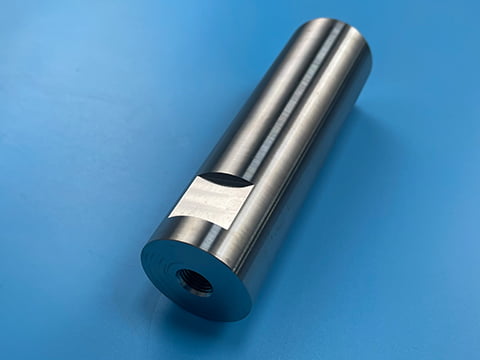
Thanks to its high purity, excellent toughness, and outstanding biocompatibility, Grade 23 titanium is used in some of the most demanding industries. Its combination of strength and safety makes it the preferred material when reliability cannot be compromised.
1. Medical & Dental Applications
Grade 23 titanium is one of the most commonly used materials for long-term implants because it integrates well with human tissue.
-
Bone screws, plates, and rods are used in orthopedic surgery
-
Dental implants, due to their excellent osseointegration
-
Joint components, such as hip or knee implant parts
-
Surgical instruments requiring corrosion resistance and strength
Its extra-low interstitial content minimizes the risk of cracking under stress, making it safe for long-term use inside the body.
2. Aerospace Components
The aerospace industry relies on materials that remain stable under high stress and fluctuating temperatures.
-
Structural fasteners
-
Engine brackets and high-strength connectors
-
Components inside pressurized or high-vibration environments
Grade 23’s toughness and fatigue resistance make it ideal for safety-critical parts.
3. High-Performance Engineering & Industrial Use
Beyond medical and aerospace fields, Grade 23 titanium is used in advanced engineering applications where high strength and light weight are essential.
-
Motorsports and racing components
-
Robotics and automation parts
-
Marine hardware that requires corrosion resistance
-
Precision mechanical parts exposed to dynamic loads
Its durability allows manufacturers to design lighter, more efficient systems without sacrificing strength.
Conclusion
Grade 23 titanium is valued because it is strong, tough, and extremely pure. These qualities make it dependable for medical implants, aerospace fasteners, and other high-precision parts that must perform safely for many years. Its lower impurity levels give it better flexibility and durability than standard titanium alloys, which is why many engineers and medical manufacturers prefer it.